Inside FOKE LED: How Premium Materials and Testing Create Superior Work Lights
Inside FOKE LED: How Premium Materials and Testing Create Superior Work Lights
FOKE LED · foke-led.com
What separates a premium LED work light from a cheap one? It's not the specs on the box—both might claim the same wattage and lumens. The difference lives in the materials you can't see, the tests you'll never witness, and the optical engineering no one talks about. This is the story of what happens inside a FOKE LED work light before it ever reaches a customer.
Many small manufacturers in the market cut corners on materials to reduce costs. The hidden dangers—premature failure, water damage, thermal degradation—don't show up until the light has been in the field for months. FOKE has spent years building a different kind of operation, one focused on the high-end market with comprehensive advantages across four core dimensions.
The Material Foundation: What Goes Into a FOKE Light
Every FOKE LED work light starts with materials sourced from formal, certified suppliers. No recycled materials. No substitutions. Every batch passes strict incoming quality inspection before entering the factory. Here's what that means in practice:
LED Lamp Beads: OSRAM or CREE Automotive-Grade
The LED beads are the heart of any work light. FOKE uses only top-grade OSRAM or CREE brand automotive-level lamp beads. These are the same tier of components used by major automotive OEMs—engineered for extreme temperature ranges, vibration resistance, and long service life. Generic or unbranded beads used by budget manufacturers may produce adequate initial output, but they degrade faster, shift color, and fail sooner under real-world conditions.
Structural Parts: Full 304 Stainless Steel
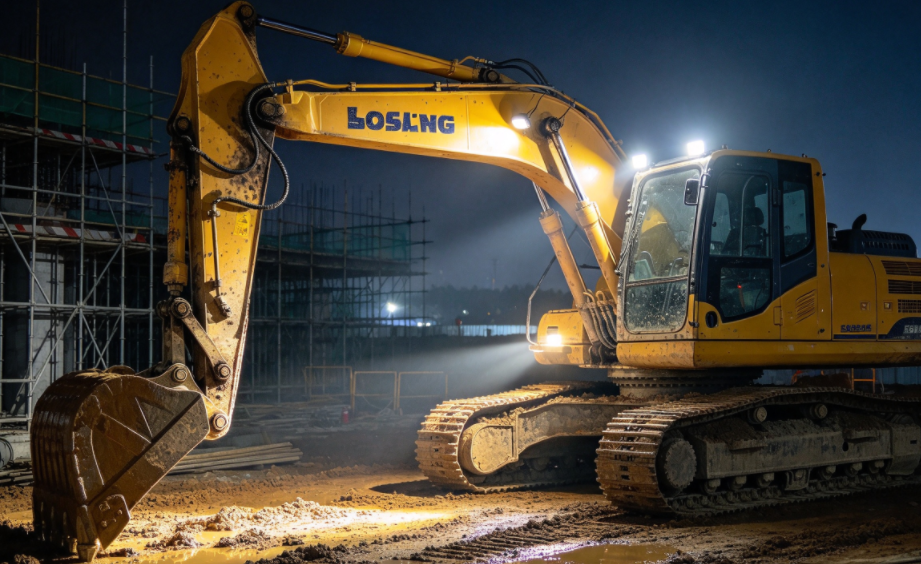
All structural components are made from full 304 stainless steel, the industry standard for corrosion resistance. This matters enormously for work lights mounted on agricultural machinery, construction equipment, and marine vessels where exposure to moisture, salt, and chemicals is constant. Lower-grade steel used by some competitors begins rusting within months, compromising both structural integrity and appearance.
Housing: ADC16 High-Density Die-Cast Aluminum
The housing is ADC16 high-density die-cast aluminum, chosen for its combination of structural strength and thermal conductivity. High-density casting means fewer microscopic voids in the metal, which translates to better heat dissipation and greater mechanical durability. The housing is, in effect, the heat sink—and a denser housing moves heat away from the LEDs more effectively, extending their life.
Aluminum Substrate: 3.0 W/(m·K) High Thermal Conductivity
The aluminum substrate that carries the LEDs is rated at 3.0 W/(m·K) thermal conductivity—significantly higher than standard substrates. This is the thermal highway between the LED junction and the housing. Higher conductivity means lower junction temperatures, which directly translates to longer LED life, more stable output, and less color shift over time.
Zero tolerance for inferior materials: FOKE does not use any recycled or inferior materials. Every component is sourced from formal channels and individually inspected before entering production.
The Testing Gauntlet: What Every Light Survives Before Shipping
Materials are only half the story. FOKE's manufacturing process advantage is built on a testing regime that most competitors simply don't run. Every single FOKE LED work light—100% of production—goes through the following sequence before it leaves the factory:
72-Hour Full-Power Continuous Aging Test
Every light is powered on at full output for 72 continuous hours. This burn-in test catches early-life failures (the "bathtub curve" failures) that would otherwise reach the customer. If a light can't survive 72 hours at full power straight off the line, it doesn't ship. Period.
3-Level Waterproof Detection
Waterproof claims are meaningless without verification. FOKE runs a three-level waterproof detection process that tests seals and gaskets under progressively more demanding conditions. This ensures the light will survive rain, high-pressure washing, and temporary submersion—real-world conditions that destroy lights with inadequate sealing.
1 Million Vibration Cycles
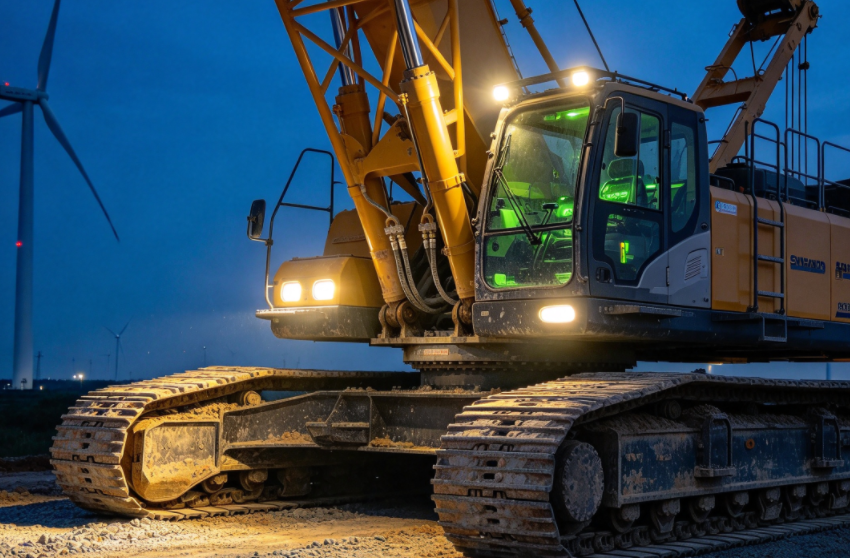
LED work lights live on vibrating machinery—tractors, excavators, trucks on rough roads. FOKE subjects every light to 1 million vibration cycles to simulate years of real-world mechanical stress. This catches weak solder joints, loose internal connections, and structural flaws that would fail in the field.
High-Low Temperature Alternating Cycle Test
Lights that work in a Dubai summer and a Siberian winter need to survive both. The high-low temperature alternating cycle test repeatedly exposes each light to extreme heat and cold, validating thermal expansion tolerance, seal integrity, and material stability across the full operating range.
<0.1% defective rate
The result of this testing regime: FOKE's defective product rate is controlled below 0.1%, far lower than the industry average. When you receive a FOKE light, it has already survived conditions most competitors' lights will never face.
The Finish: Precision CNC and Automatic Sandblasting
FOKE's appearance advantage comes from two processes that most manufacturers skip for cost reasons. Precision CNC machining ensures dimensional accuracy and clean edges on every housing. The imported automatic sandblasting process produces a surface that is smooth, fine, and completely free of burrs and scratches.
The paint layer is engineered for outdoor durability—it will not peel, chip, or fade even after years of UV exposure. This isn't just about looks. A compromised surface is a gateway for corrosion. FOKE's finish keeps the housing sealed and protected for the long haul.
The Optics: Thousands of Simulations for a Safer Beam
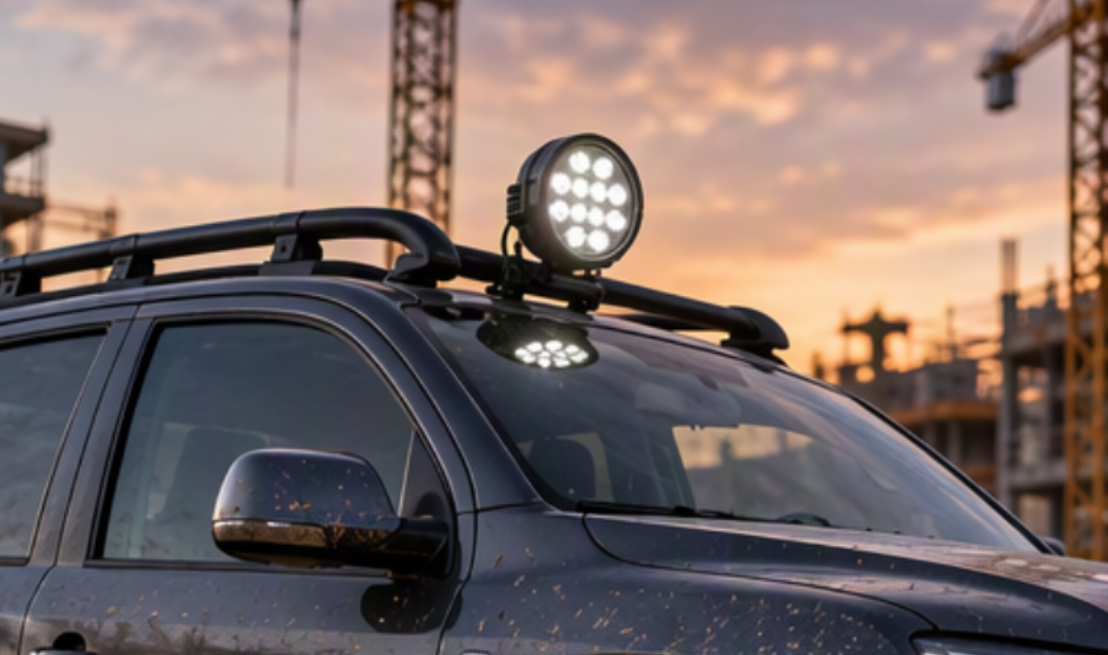
Perhaps the most underappreciated advantage is FOKE's optical engineering. A raw LED is just a point source—what matters is how that light is shaped and directed. FOKE's professional optical R&D team has conducted thousands of optical simulation tests to design a light pattern that delivers:
Uniform, soft illumination with no harsh hotspots
No dark areas across the beam pattern
No dazzling stray light that could blind the operator or oncoming traffic
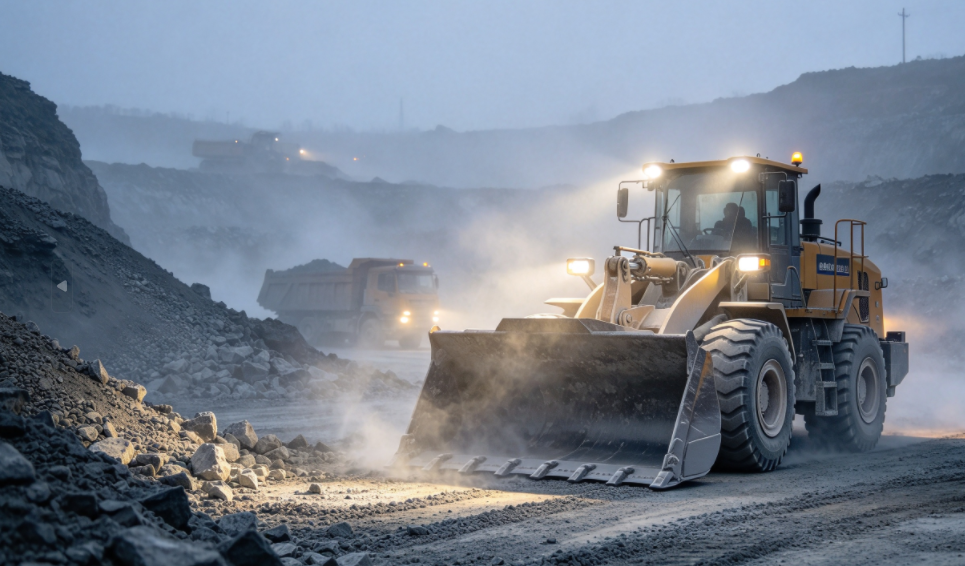
The practical impact? Reduced visual fatigue for operators working long hours, and improved operation safety. This is especially critical for night-shift construction, agricultural harvesting, and mining operations where clear, comfortable visibility is directly tied to productivity and accident prevention.
Conclusion: FOKE LED work lights achieve full-dimensional performance leadership in the industry—materials, process, appearance, and optics. Choosing FOKE means choosing premium quality that is far superior to ordinary manufacturers, with higher product added value and user reputation.
The FOKE Standard
When you choose FOKE LED work lights, you're not just buying a product. You're buying the result of a system: top-grade materials from certified suppliers, a four-stage testing gauntlet, precision finishing, and dedicated optical engineering. Each pillar reinforces the others. Remove any one, and the product degrades. That's why FOKE doesn't cut corners—and why the difference shows up in the field, year after year.
Want LED Work Lights Built to the Highest Standard?
FOKE LED: premium materials, rigorous testing, superior optics.
Discover more at foke-led.com
What to Look for When Choosing LED Work Lights: The FOKE LED Standard
Why FOKE LED Outperforms Competitors: A Four-Dimension Comparison
Related Article