
What Does IATF 16949 Certification Mean for an Auto Light Factory?
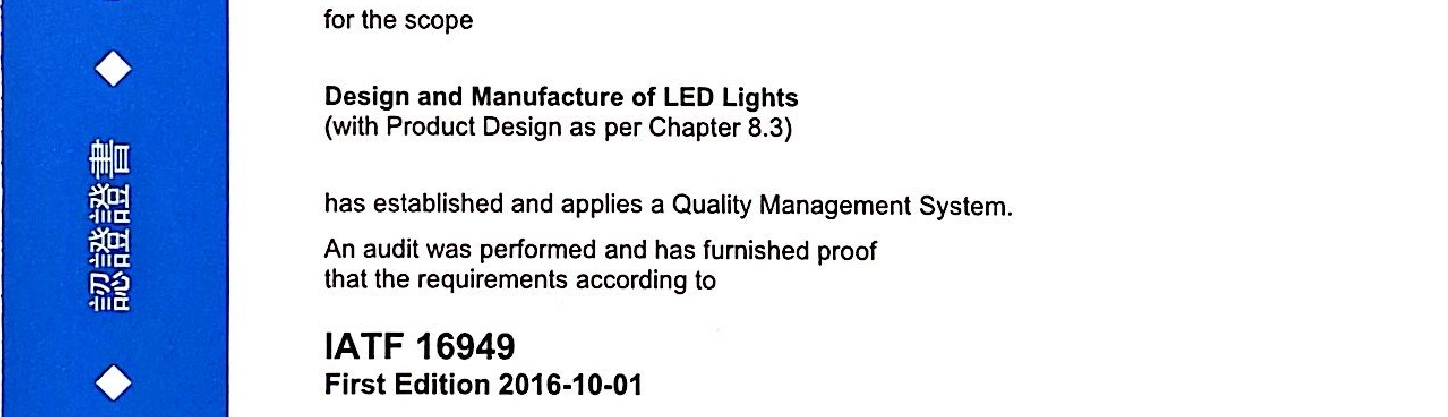
What Does IATF 16949 Certification Mean for an Auto Light Factory?
For automotive lighting manufacturers, achieving IATF 16949 certification is more than just a badge of honor—it’s a transformative step that elevates their operations, credibility, and market position. But what does this certification truly mean, and how does it impact a factory in practical terms? Let’s break it down and explore a real-world example to illustrate its significance.
1. Alignment with International Quality Standards
IATF 16949 is the globally recognized quality management standard for the automotive industry. Certification means the factory’s quality management system meets rigorous international benchmarks, ensuring it can deliver products that satisfy the high demands of automotive manufacturers.
2. Building Customer Trust
Certification builds confidence among customers, demonstrating the factory’s ability to consistently produce high-quality products. This trust often translates into more orders and long-term partnerships.
3. Improved Production Efficiency
The certification process requires factories to streamline processes, reduce waste, and enhance efficiency. This not only lowers costs but also boosts productivity and product quality.
4. Enhanced Market Competitiveness
IATF 16949 certification is often a prerequisite for entering the global automotive supply chain. It gives factories a competitive edge, helping them stand out in a crowded market.
5. Commitment to Continuous Improvement
The standard emphasizes a culture of continuous improvement, pushing factories to refine their processes and maintain high standards over time.
6. Risk Mitigation
By implementing a systematic approach to quality management, factories can better identify and control risks, reducing the likelihood of defects, recalls, and operational disruptions.
7. Employee Skill Development
Certification requires ongoing employee training, which enhances skills and fosters a strong quality-conscious mindset across the organization.
8. Global Expansion Opportunities
With IATF 16949 certification, factories can meet the requirements of global automotive manufacturers, paving the way for international growth.
9. Supply Chain Integration
The certification encourages closer collaboration with suppliers, ensuring that every link in the supply chain adheres to the same high standards.
10. Regulatory Compliance
Certification ensures that factories comply with automotive industry regulations, minimizing legal risks and ensuring smoother operations.
A Real-World Case: XYZ Automotive Lighting
To put this into perspective, let’s look at XYZ Automotive Lighting, a mid-sized manufacturer specializing in LED headlights and taillights for passenger vehicles. Before pursuing IATF 16949 certification, the company faced several challenges:
Inconsistent product quality: Defect rates were higher than industry averages, leading to customer complaints and returns.
Limited market access: Without certification, XYZ struggled to attract major automotive OEMs (Original Equipment Manufacturers).
Operational inefficiencies: Production processes were outdated, resulting in high waste and low productivity.
After deciding to pursue IATF 16949 certification, XYZ underwent a comprehensive transformation:
Process Optimization: The company implemented lean manufacturing principles, reducing waste and improving production flow. This led to a 20% increase in productivity within a year.
Quality Management System Overhaul: XYZ established a robust quality management system, including rigorous testing protocols and real-time monitoring. Defect rates dropped by 35%, significantly boosting customer satisfaction.
Employee Training: The factory invested in training programs to upskill employees, fostering a culture of quality and accountability.
Customer Confidence: With certification in hand, XYZ secured contracts with two major European automotive OEMs, increasing annual revenue by 30%.
Global Expansion: The certification opened doors to new markets, enabling XYZ to establish partnerships in North America and Asia.
For automotive lighting factories like XYZ, IATF 16949 certification is not just a compliance requirement—it’s a strategic tool for growth, efficiency, and excellence. By aligning with international standards, building customer trust, and fostering continuous improvement, factories can position themselves as leaders in the competitive automotive industry.
If your factory is considering IATF 16949 certification, take inspiration from XYZ’s journey. The investment in time and resources is well worth the long-term benefits it brings. After all, in the automotive world, quality isn’t just a goal—it’s a necessity.
Combination Light FK-9921: The Ultimate Lighting Solution for Forklifts Trucks
John Deere LED Farm Lights - Maximum Performance
Related Article