Decoding the Specs: Lumens, Watts, and IP Ratings You Must Know Before Buying Your Next LED Light Bar
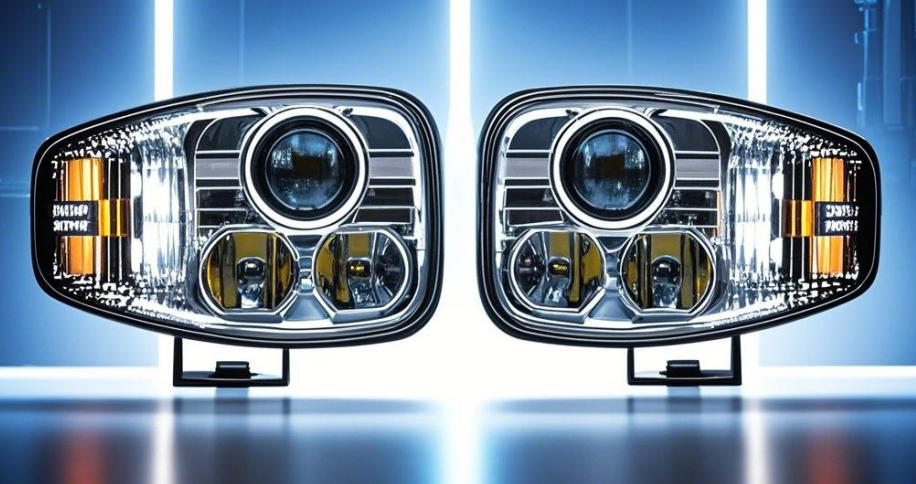
Decoding the Specs: Lumens, Watts, and IP Ratings You Must Know Before Buying Your Next LED Light Bar
(Or, How to Sound Like a Pro in the 4×4 Accessories Aisle Without Actually Being One)
You’re standing in front of a wall of 4X4 LIGHT BARS that look like they were teleported straight out of a Star Destroyer. One box screams 50,000 lumens, another brags “only 180 W,” and a third swears it’s IP69K-rated—like some secret agent clearance level. Your brain short-circuits. Your wallet cowers. The sales guy is already Googling “lumens vs lux” under the counter.
Take a breath. At FOKE lighting (www.foke-led.com), we translate marketing mumbo-jumbo into campfire English every day. Let’s crack the code so you can pick the BEST LED LIGHT BAR FOR TRUCKS without needing a PhD in photonics.
Lumens: The “Look How Bright I Am” Number
What it really means: total light output. Think of lumens as the number of fireflies you stuffed into a jar—more fireflies, more glow.
Rule of thumb for a LED LIGHT BAR 4X4:
• 5,000–10,000 lm = solid upgrade over stock headlights
• 15,000–25,000 lm = “I can see the kangaroo before it sees me” territory
• 30,000 lm+ = aircraft-landing territory—fun, but check local laws unless you enjoy defect stickers.
FOKE reality check: our 32-inch Aurora series punches out 19,800 lm, enough to light a footy oval yet still legal for on-road use in Oz.
Watts: The Fuel Gauge, Not the Speedometer
Watts = how much electrical juice the bar gulps. More watts ≠ more lumens if the LEDs are as efficient as a rusty lawnmower.
Quick math: divide lumens by watts to get lumens-per-watt (LPW). Anything north of 100 LPW is modern tech; south of 80 means you’ve found yesterday’s bargain-bin diodes.
FOKE flex: our Gen-4 chips hit 110 LPW. Translation: 180 W bar, 19,800 lm, alternator stays happy, battery doesn’t file for divorce.
IP Ratings: The Mud-and-Beer Shield
IP stands for “Ingress Protection.” Two digits: first = dust, second = water.
• IP67: can handle a quick dunk (1 m for 30 min)
• IP68: submarine-lite (1.5 m for at least an hour)
• IP69K: survives a 1,450 psi pressure-washer blast—perfect after a Simpson Desert bath.
Every FOKE LED BAR 4X4 is IP69K-certified. We literally blast them with 80 °C water jets for two minutes, because we know you’ll find the deepest puddle on purpose.
Pro Tip: If the spec sheet only says “water-resistant,” run. That’s code for “will die in a light drizzle.”
Beam Pattern Cheat Sheet (Because Specs Aren’t Just Numbers)
Spot beam: 8–15° pencil of light—mount on your LED LIGHT BAR FOR TRUCK ROOF for long-distance sniping.
Flood beam: 60–120° wide wash—perfect for a LED LIGHT BAR FOR TRUCK GRILL to light up the edges of a track.
Combo: half spots, half floods—best all-rounder for 4X4 ROOF LIGHTS when you don’t know what’s around the next bend.
Kelvin & CRI (Bonus Round)
Kelvin (color temperature): 5500 K is daylight white—great contrast on red dirt.
CRI (color rendering index): above 70 means you can actually tell a rock from a shadow. FOKE bars sit at CRI 75, so you won’t high-center on a “shadow” that turns out to be a boulder.
Putting It All Together—Real-World Examples
• Weekend Warrior Hilux: 22-inch, 120 W, 13,200 lm, combo beam, IP69K → lights up fire trails without blinding oncoming traffic.
• Outback Tourer Patrol: 42-inch, 300 W, 33,000 lm, curved, pure spot up top + two 60 W flood cubes on bumper → daylight at 800 m.
• Rock-crawling Jeep: 10-inch, 80 W, 8,800 lm, flood pods on A-pillar → zero surprises at 5 km/h.
The FOKE Decoder Card (Print & Stick in Your Glovebox)
Lumens ÷ Watts ≥ 100? ✅
IP69K? ✅
Beam pattern matches your mission? ✅
If any box is unchecked, keep walking—or just head straight to www.foke-led.com where we’ve already done the math.
Effortless Installation: A Guide to Universal Mounting and CAN-Bus Integration for Oval LEDs
A Playful Yet Dead-Serious Compliance Guide to EU Agricultural Lighting
Related Article