
High and Low Temperature & Humidity Test – It‘s Not Just About Heat and Cold, but Also Moisture
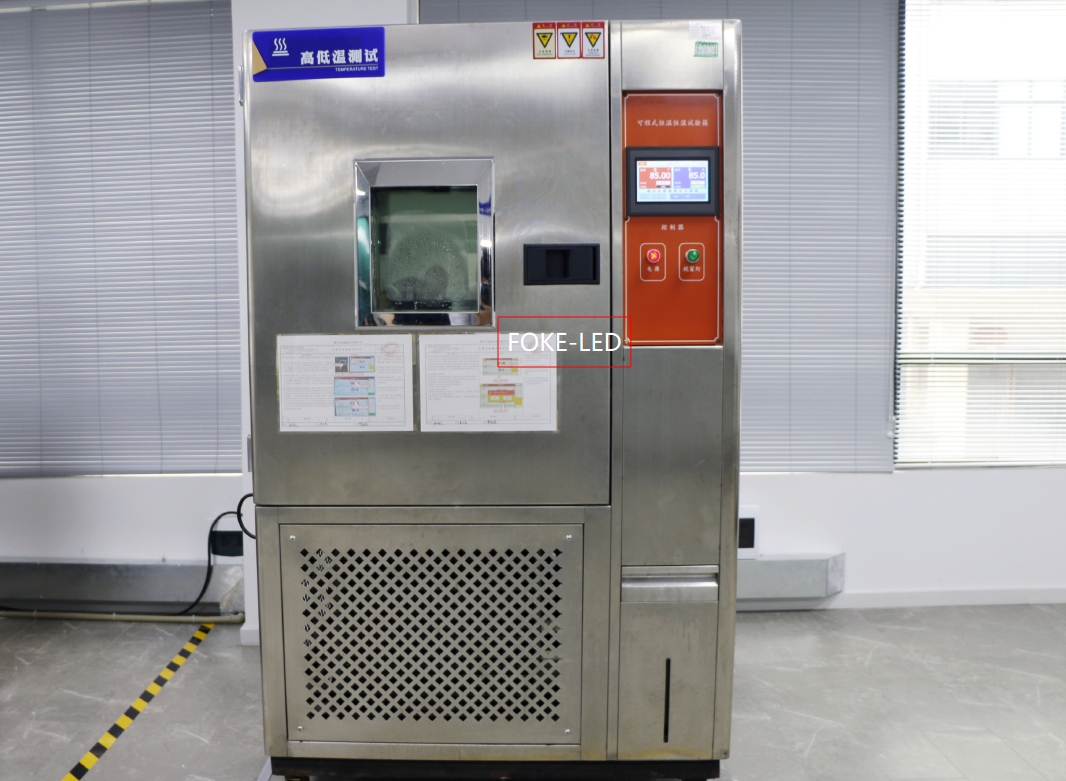
High and Low Temperature & Humidity Test – It‘s Not Just About Heat and Cold, but Also Moisture
Have you ever wondered whether a headlight that works perfectly in a dry desert might suffer from moisture ingress and short circuits in a humid, rainy region? Or whether a circuit board that performs flawlessly in the lab might experience insulation degradation after a month of storage in a damp warehouse during the rainy season? The answer to these questions lies in a seemingly simple but critical test — the High and Low Temperature & Humidity Test.
Core Function & Application
The core function of the high and low temperature & humidity test is to simulate constant or alternating temperature and humidity environments, evaluating a product’s material stability, electrical performance, and corrosion resistance under damp heat conditions. Building on basic temperature testing, it adds precise humidity control to more comprehensively simulate real-world usage, storage, and transportation conditions. In simple terms, it doesn’t just ask whether a product is “afraid of heat or cold” — it also asks whether it is “afraid of moisture”.
Which Industries Rely on It?
In the electronics and electrical appliances industry, PCBs, chips, sensors, displays and other components are prone to reduced insulation resistance, short circuits or parameter drift in humid environments. This test effectively verifies their electrical stability under damp heat conditions.
In the automotive industry, engine control units, headlights, sensors, wiring harnesses — almost every electronic component in a modern vehicle faces rain, water crossings or high-humidity regions. This test helps engineers evaluate sealing integrity and corrosion resistance.
In the aerospace and military industry, airborne equipment and navigation systems can suffer from condensation, signal drift or even functional failure under rapid temperature changes and high humidity at altitude. This test verifies their anti-condensation capability and functional reliability.
In the materials and chemicals field, plastics, rubbers, coatings, adhesives can absorb moisture, age, lose adhesion or corrode in humid heat. This test evaluates moisture absorption rate, aging performance, and corrosion resistance, providing scientific data for material selection.
How We See Moisture — The Hidden Enemy
In our view, while heat and cold are major challenges, moisture is often more insidious and destructive. It won’t instantly burn a circuit like high heat, nor freeze components like extreme cold. Instead, it erodes, corrodes and destroys day by day, like water seeping into rock. That’s why we incorporate high and low temperature & humidity testing as a standard process in the design and manufacturing of every LED headlight. From the sealing structure of the housing to the moisture-resistant coating on the driver board, everything must pass rigorous damp heat cycling validation.
From the Lab to the Real World
Testing is never the goal — it is the means. Every combination of temperature and humidity we simulate in the lab corresponds to real climate conditions somewhere in the world. From the high heat and humidity of tropical islands to the drastic day-night temperature swings of deserts, and even container condensation during ocean transport, our products must withstand them all.
We are a professional supplier serving many globally recognized automotive lighting brands, operating an SGS-certified factory covering over 11,000 square meters. We hold certifications including IATF16949, ISO9001, EMARK, EMC, CE ROHS and CISPR25, and are recognized as a High-Tech Enterprise. From SMT assembly to EMC testing, from waterproof and aging tests to damp heat cycling, we protect the quality of every headlight with a complete manufacturing and testing system. Choosing us means choosing not just a light, but a complete travel safeguard validated against heat, humidity, and everything in between.
Vibration Test – Applying Pressure to Products to Reveal Hidden Defects
Thermal Shock Chamber – How Do We Verify a Product‘s Survival at Temperature Extremes?
Related Article