3D Printer – Turning Ideas into Physical Objects in Just One Day
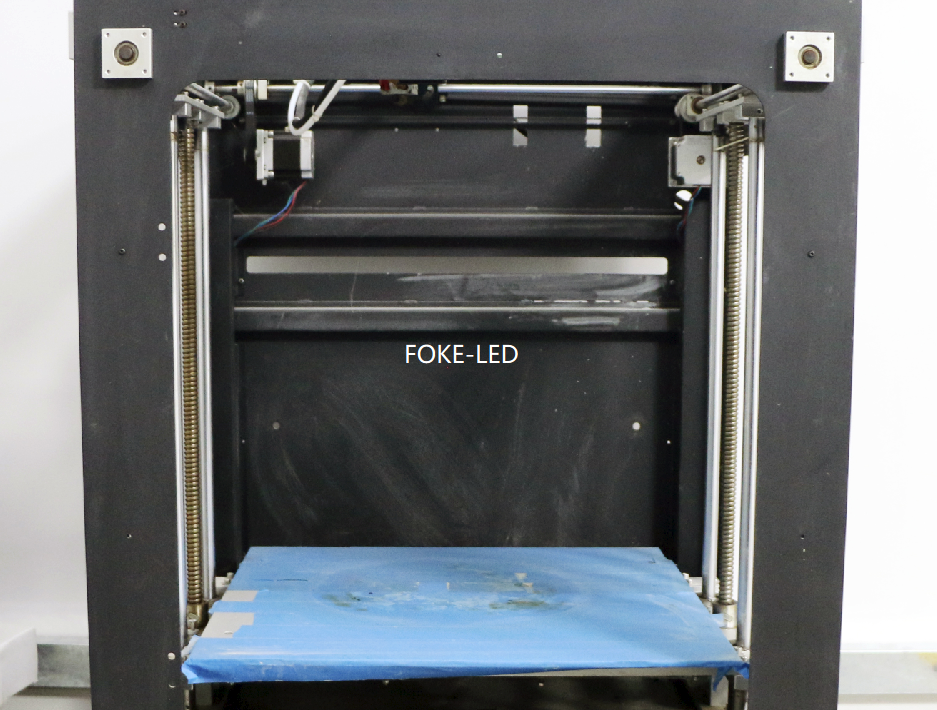
3D Printer – Turning Ideas into Physical Objects in Just One Day
In the world of product development, the journey from a design drawing to a physical sample that you can hold in your hand used to be a long and expensive process. Molding, sampling, waiting, modifying — each cycle consumed time and money. Today, that is changing. And the device driving this change is a small piece of equipment sitting in the corner of the lab — the 3D printer.
Core Function & Application
The core function of a small-scale design sample 3D printer is to rapidly and accurately transform digital designs into physical models, providing an efficient tool for product design, R&D verification, and creative expression. This type of device is designed specifically for design studios, R&D laboratories, educational institutions, and individual creators, optimized in terms of size, cost, and ease of use, making the process of “turning ideas into tangible objects” unprecedentedly convenient. In our view, the greatest value of a 3D printer is not the printing itself, but the R&D efficiency revolution it enables.
High-Precision Prototype Manufacturing
In the early stages of product design, an accurate physical model is far more convincing than any rendering. A 3D printer can reproduce every detail of a digital model with extremely high precision, helping engineers and designers accurately verify a product’s appearance, assembly relationships, and surface texture. Does a snap-fit actually engage? Is the gap between two parts reasonable? Is the curved surface smooth and continuous? These questions are difficult to fully judge on a computer screen, but the moment you hold the physical model, the answers become clear. High-precision printing avoids misjudgments caused by insufficient accuracy, making design reviews more reliable.
Rapid Design Iteration
The cycle time for traditional molding and sampling is typically measured in weeks or even months, while 3D printing compresses that cycle into hours. Designers can complete the full cycle of “design → print → evaluate → modify” within 24 hours. A design modified in the morning can be printed and physically tested by the afternoon. Issues discovered during testing can be modified and re-printed for verification on the same day. This near-real-time iteration speed dramatically improves R&D efficiency and significantly shortens product development cycles.
Complex Structure Verification
Some structures look perfect on the design drawing but reveal problems only when actually fabricated. 3D printers can produce complex geometries that are difficult or impossible to achieve with traditional manufacturing processes, helping engineers verify the manufacturability and functionality of a design. For example, is a snap-fit structure still reliable after repeated insertion and removal? Is an internal flow channel completely unobstructed? Does a thin-walled structure have sufficient strength? These questions can be answered quickly through 3D printing, without waiting until after molding to discover problems.
Multi-Material and Multi-Color Expression
For scenarios requiring design reviews or user testing with clients, the texture and appearance of a model are critically important. 3D printers support a variety of materials and colors, allowing more realistic simulation of the final product’s visual effect and tactile feel. Whether soft rubber textures, rigid housings, or translucent materials, these can be accurately represented at the prototype stage, helping teams obtain more realistic feedback during design reviews.
The Role of 3D Printing in Our R&D Process
In a company like ours that manufactures LED lighting, the 3D printer is not used to directly produce finished headlights — that is the job of molds and injection molding machines. The value of the 3D printer lies in the R&D stage. The design of a new headlight often requires dozens of structural optimizations and appearance adjustments. Without 3D printing, each adjustment could mean remolding or remaking a hand sample — costly and time-consuming. With 3D printing, our engineers can obtain a new sample within hours, mount it on a vehicle for testing, identify problems, modify the design, print again, and test again. The speed of this cycle determines how quickly a product reaches the market.
From optical verification of lenses to assembly testing of housings, from airflow simulation of heat sinks to compression testing of seals, 3D printing has permeated every aspect of our product development. It does not appear in the final product, but behind every final product, it plays a quiet but essential role.
We are a professional supplier serving many globally recognized automotive lighting brands, operating an SGS-certified factory covering over 11,000 square meters. We hold certifications including IATF16949, ISO9001, EMARK, EMC, CE ROHS and CISPR25, and are recognized as a High-Tech Enterprise. From rapid 3D printing validation to SMT assembly production, from EMC testing to environmental reliability testing, we protect the quality of every headlight with a complete R&D and manufacturing system. Choosing us means choosing not just a light, but a product refined through efficiency and precision.
3D Scanner – Taking a “3D Photo” of Your Mold, Revealing Every Complex Surface
Vibration Test – Applying Pressure to Products to Reveal Hidden Defects
Related Article