Differences Between 304 Stainless Steel and 201 Stainless Steel for LED Vehicle Lights
Differences Between 304 Stainless Steel and 201 Stainless Steel for LED Vehicle Lights
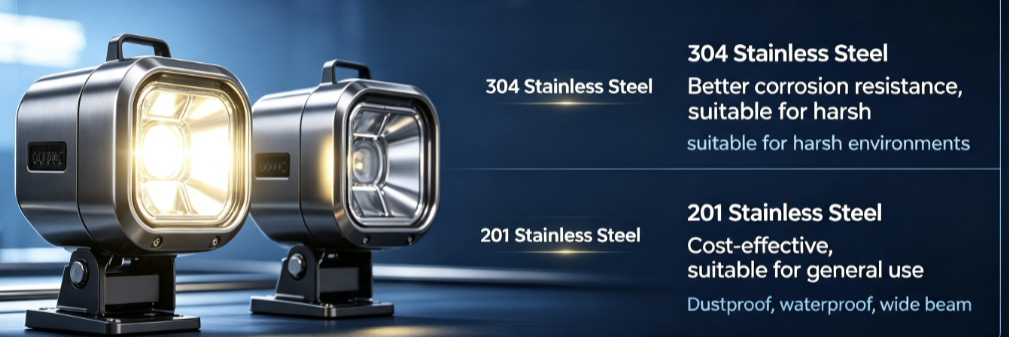
Many low-cost LED automotive light products on the market use 201 stainless steel for structural accessories such as mounting brackets, screws and gasket shims to reduce costs. 201 stainless steel has a low nickel content, which is only about 1%-2%, so its anti-corrosion performance is very limited. When it is exposed to outdoor humid air, rainwater and road salt spray for a long time, it will start to rust obviously in 3-6 months. Once the structural parts rust, it will not only affect the appearance of the LED light, but also easily cause the bracket to jam and cannot adjust the lighting angle, or even break directly under bump vibration, leading to the risk of the LED light falling off during driving. In contrast, 304 stainless steel has a nickel content of more than 8%, adding a sufficient proportion of chromium elements, which has excellent anti-rust and anti-corrosion performance. After 1000 hours of salt spray test, there is no obvious rust spot on the surface, and it can work stably for more than 5 years in the harsh outdoor environment without corrosion failure.
Using 304 stainless steel structural parts for LED automotive lights can greatly extend the overall service life of the product, avoid hidden safety hazards caused by structural rust during driving, and effectively reduce the later maintenance cost of users. FOKE LED work lights and agriculture lights all use full 304 stainless steel structural accessories from brackets to screws, which can maintain a good rust-free state even after years of outdoor exposure, bringing you lasting and stable installation reliability.
FOKE LIGHTING Invitation for MIMS Automobility Saint Petersburg 2026 Exhibition
Key Differences Between LED Work Lights and LED Agriculture Lights
Related Article